
- SME founders face pressure from constant competition, copied products, digital platforms, shrinking profit margins
- Believes founders must undergo training so they can competently apply business fundamentals, & keep adapting as biz grows
For nearly two decades, Dr Azizan Osman has been listening to business owners talk about the realities of running a business. He listens when margins shrink even as sales grow, and when founders admit they are exhausted. He listens when the numbers look “okay” on the surface, but something underneath is quietly breaking.
Azizan is the founder of RichWorks Academy Sdn Bhd which he subsequently renamed Richworks X, a business coaching and mentoring organization based in KL. Over the past 18 years, he has trained a substantial number of entrepreneurs through seminars and workshops, while reaching a wider audience online. He has also worked closely with more than 2,500 millionaire business owners.
“I’ve seen a lot of success,” he says. “And I’ve seen a lot of failures as well.”
“I didn’t really understand business,” he says. “I just thought, if other people can do it, I can do it.”
By 2000, the consequences had caught up. Azizan was more than RM250,000 in debt. Loan sharks were coming to his house. But worse than that, he still lacked clarity on what he was doing wrong. That clarity came through a friend who later became his mentor, a businessman in Melaka named Peter (Azizan declined to share the full name to respect Peter’s privacy).
Peter asked three questions. “Who taught you marketing?” “No one,” Azizan replied. He had studied marketing academically, but no one had guided him practically. “Who guided you in business?” Again, no one. “And did you grow up learning business hands-on?” The answer was still no. Peter’s advice was blunt. Quit business. Go learn sales. Find someone who can teach you properly. “So I did,” Azizan says.
From 2001, he spent nearly eight years immersed in sales and marketing. He went door to door. He worked roadshows. He sold credit cards and broadband services for banks and telcos including Standard Chartered, HSBC, and Maxis.
“That’s where I built my understanding,” he says. “Sales. Marketing. Leadership. Structure.”
Turning experience into enterprise
Richworks X began in 2008. A friend approached Azizan for advice on a struggling business. Azizan sketched out a simple sales and marketing plan on paper. Within months, the friend returned with stronger cash flow and a noticeable increase in sales.
Then came along another friend. And another.
“I realized this is something I’m capable of doing,” he says. “Guiding people, teaching people, using my experience.”
He applied years of experience, diagnosing problems, breaking down markets, and helping people think clearly about how to sell and position their businesses. That same year, he approached TV3 to be interviewed.
“I told them, interview me. I know how to unlock people’s potential.”
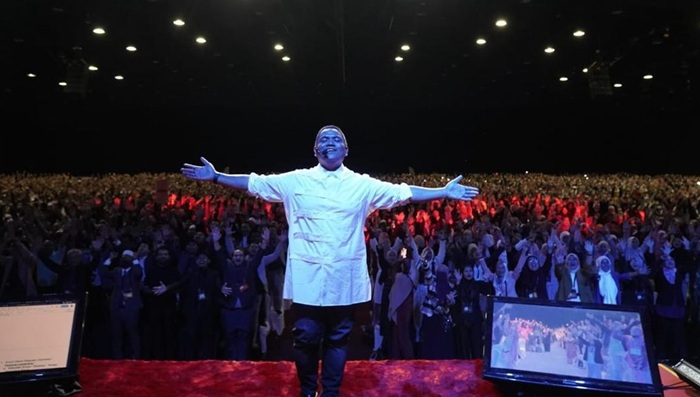
By 2009, Richworks X was hosting events with thousands of attendees. At its peak, one event drew more than 12,600 people at Setia Alam Convention Centre.
“I love SMEs,” he says. “I understand what makes them successful and what stops them. Over time, I’ve also come to see just how important SMEs are to Malaysia’s economy, contributing around 38% to 40% of the nation’s tax revenue. Meaning, if SMEs do well, our country will do well.”
What SMEs are quietly saying about their struggles
Behind closed doors, many SME owners describe a growing disconnect between sales and profitability. Sales may be holding up, even growing in some cases. But profits are shrinking.
“Margins are shrinking,” Azizan says. “Competition is fierce. Digital platforms let almost anyone sell. Factories in China are livestreaming directly into Malaysian marketplaces. Products are copied. Brands are imitated. And price wars follow,” he lists, grimly. “It’s good for consumers,” he adds. “But it’s not good for businesses. And from a national perspective, if SMEs are not making enough money, they cannot pay taxes, leading to lower tax collections even as tax rates continue to rise.”
The emotional toll is just as heavy. He describes founders who feel constantly on edge, never able to relax.
“It’s like going to school when the teacher can give you a quiz anytime,” he explains. “You’re always on alert. Every night brings the same questions. Can I pay salaries? Can I cover EPF and SOCSO? Can I manage cash flow? Can I survive another month?” This kind of environment increases stress and is not healthy. “But this is business and the environment today is far tougher,” Azizan says solemnly.
Clarity over hustle
Azizan advises SMEs to think strategically and anticipate potential challenges to stay prepared and maintain peace of mind.
“I tell them to plan for different scenarios. A, where everything is fine. B, when competition undercuts your prices and C, when someone copies your products. Being prepared for any situation gives them better control and peace of mind.”
One of Azizan’s key observations is that many SMEs are not failing outright. They are still operating, still selling and still paying bills. But structurally, they are fragile.
“The question is whether it’s the wrong business (to be in),” he explains, “or the right business but with the wrong leadership or structure.”
Azizan returns to three basic questions. These may look common for SMEs to address, but he stresses that they help businesses prepare more effectively and pinpoint how and where to win.
“What problem are you solving? Whose problem is it? And how do you reach them?”
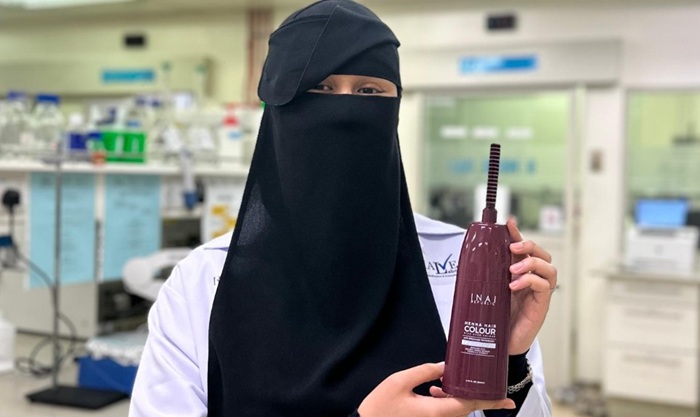
Azizan tells the story of Inai Republic. The founder, Syarifah Suraiha, had a nail business that was thriving – until competitors copied her products, cutting sales by 40%–50%. Rather than competing on price, Azizan encouraged her to rethink the problem.
“After doing some research, I advised her to turn Inai into a shampoo that colors hair and tackle issues like gray hair or hair loss. It took her two years to embrace the idea, but once she launched it, her annual sales jumped from RM3 million to RM18 million in a period of less than 5 years."
When contacted by DNA, Syarifah confirmed the impact Azizan’s advice had and said she actually hit the RM18 million revenue after one year of the new line’s introduction.
By clearly defining the target market, their age group, and specific pain points, the Inai Republic team was able to craft focused brand and marketing messages, making the new product a success, said Azizan.
“It’s about clarity. It's really about understanding how to win. Even in a tough market or economy, you can win if you understand the right customers and offer the right solution.”
Azizan adds, “Don’t compete with the big boys. Big companies can spend millions on retail and advertising. But as a small SME, you can focus on personalization and address specific customer problems.” For his efforts in supporting SME founders, Azizan was recently appointed as Professor by the Innovative University College, based in Kuala Lumpur. He is also the chairman of the university.
Why January matters and what must change
After pushing hard to close the year in December, many founders ease off.
“That’s a mistake,” Azizan says. “In a more competitive environment, January, February, and March shape the entire year.”
He urges founders to use early Q1 to reassess fundamentals. Where profit really comes from. Whether the customer has changed. Whether the business model still makes sense.
Many SME struggles stem from a lack of foundational business education. When asked what SMEs need to move from survival mode to sustainable growth, Azizan offered an analogy.
“Nursing is a job where mistakes can risk a patient’s life. You need proper training, practical experience, and a solid understanding of the fundamentals. If you want a nurse to care for your bedridden parents, would you just take anyone? Business is the same. You need the right knowledge and skills to perform competently.”
Azizan adds, “If I ever speak to the minister of entrepreneurship, I would advise creating a compulsory program for anyone starting a business. They must undergo training, just as insurance agents do, so they can competently apply business fundamentals.”
Training, he says, should evolve as businesses grow. “When SMEs reach certain sales levels or seek funding, they should go through more advanced programs. The government spent RM40 billion on MSMEs in 2025. How do we know the money is going to the right people? Not educating them is the fastest way to set them up to fail.”
Ineffective traditional training seminars
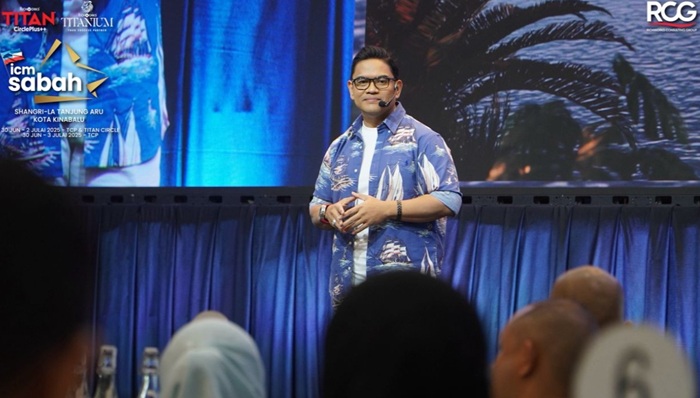
While he himself offers many training courses, Azizan notes that traditional training seminars no longer work.
“When we used to run seminars in halls (with large audiences), attendees would go back and face completely different situations. The solution might not work. That’s why, since 2018, our approach now has been all about close monitoring, coaching, and consulting. We have 20 experienced coaches who stay with you to adjust, refine strategies, and help you win,” he explains.
They currently train about 300 entrepreneurs at any one time. For now, Azizan’s work is less about motivation and more about diagnosis. Listening carefully and asking hard questions to help founders regain clarity.
Digital journey and the role of AI
Digital transformation is not a recent shift. It has been part of how Azizan thinks about scale.
“About 99%,” he says, when asked how much AI has changed the way he runs the business. “If a system can copy what we’re already doing, then the work becomes much easier.”
As early as 2015, he began pushing his team to document processes and build systems that could replicate human workflows. A few years later, while working with professors from a university, those ideas became clearer.
“We discussed what was coming next. AI was one of the major trends,” he says.
Rather than building complex new apps, RichWorks focused on platforms people were already comfortable with.
“At first we thought we needed our own apps,” Azizan explains. “Now we just use WhatsApp. People already know how to use it.”
When ChatGPT was launched, Richworks X integrated it into its WhatsApp system to handle enquiries and consultations. That system has since evolved into a personalised AI model tailored to Richworks X’ methodologies and data.
The AI system was developed primarily in-house by the Richworks research team, initially by three people. The first client-facing prototype was launched in June 2025 after several months of testing, and today a team of around 10 across multiple project teams continue to expand its capabilities, with support from external advisors when needed.
This is now central to how the organisation plans to scale beyond Malaysia, across ASEAN, and eventually globally. “So, we can help more SME owners without being limited by manpower,” said Azizan.
Today, Richworks X runs an integrated Telegram–WhatsApp platform where AI handles responses, monitors activity, and tracks performance. Even reporting is automated.
While large organisations can move quickly, Azizan acknowledges that many SMEs, especially in manufacturing, struggle with technology adoption.
“Most SMEs want things to be faster, better, and easier,” he says. “But they don’t really understand how the technology works.”
Cost, he adds, is often misunderstood. “People think it’s expensive. But even if there is a cost, the efficiency you gain saves you far more in the long run.”
According to Azizan, the bigger gap is in exposure and education. SMEs need clearer, hands-on understanding of how digital tools and AI can be applied in their day-to-day operations. He points to Singapore as an example.
“What I like is how serious they are. Every citizen or permanent resident is given funding for AI training, and they are expected to complete it. Even teachers are trained to understand AI.”
In Singapore, government programmes subsidise up to 70% of AI course fees, with additional support for those over 40, making AI training part of a broader push for lifelong upskilling and national competitiveness.
The next SME trend
Azizan believes the next phase for SMEs is not just growth, but building businesses that can be sold.
“One of our directions is helping founders build real business value,” he says. “So, one day, they can exit.”
Yet, it is a known fact that many SMEs remain founder-dependent. When founders retire or step away, the business often ends with them. At the same time, a new group of entrepreneurs is always emerging, and some of them are people who want to own businesses, but not start from zero.
“They want something proven,” Azizan explains.
To support this shift, Richworks X licensed a US-based intellectual property (IP) framework focused on business value creation. The purpose of the framework is to help founders build companies that are structured, measurable, and ultimately sellable. It guides SMEs in formalising their operations, documenting processes, tracking financial performance, and organising data so the business can run independently of the founder. Azizan declined to reveal the name of the platform, citing timing is not right, yet,
By strengthening systems, governance, and profitability, the framework enables business owners to assign a clearer, defensible valuation to their companies, whether for investment, succession, or eventual sale. Infact, Azizan sees technology, systems, and IP ownership becoming central to this trend across ASEAN.
“The next trend across ASEAN will be building businesses with the intention to sell, while new owners come in to scale and grow them further,” he predicts.
No doubt, Azizan and Richworks X will be well placed to help the new cluster of owners to take the business to the next level.